Early childhood career pathways explained
By Janina WaldmannPublished on
Working in early childhood education is an opportunity to help guide the thinkers, leaders, and changemakers of tomorrow. Find out which career path is right for you.
Why choose an early childhood career?
A career as an early childhood professional can be incredibly rewarding. You’ll get to witness your tiny charges' big milestones, like birthdays, first steps, first words, starting school, and so much more.
Early childhood career progression: from educator to leader
If a hands-on job with young children sounds like your idea of fun, you’ll be pleased to hear that job opportunities abound.
Annika Grima is the approved provider, nominated supervisor and educational director at The Little Kids School in Glenmore Park, Sydney, and says of the typical career trajectory: “generally, you would go from a trainee or room assistant to a room leader, and then, as you progress in your career and your qualifications, you might become [an] educational leader.”

Who’s who in the sector
The early childhood career ladder is made up of these main roles:
Trainees
They're just starting out on their early childhood professional journey. They’re typically working towards a qualification, like a Certificate III in Early Childhood Education and Care, but don’t hold one yet.
Early childhood educators and room assistants
They spend their days working with children, typically in daycare centres or preschools. They help children develop the social, emotional, and physical skills they’ll need to succeed later in life through play and structured activities. They typically have a Certificate III or Diploma in Early Childhood Education and Care.
Room leaders
They do precisely what their role implies – they’re responsible for the children and staff in their assigned room, including ensuring safety, liaising with parents, and record-keeping.
Educational leaders
These team members work less with kids and more with the staff of early childhood education services. They might mentor younger staff, manage professional development, and develop centre curricula based on educational theories.
Annika explains that educational leaders typically hold a diploma-level qualification or higher. This is because, Annika explains, “under the national laws and regulations, your centre needs at least 50% of the staff to be diploma qualified.”

Early childhood teachers
As those responsible for planning and implementing activities to support learning and development, early childhood teachers are required to hold a Bachelor of Early Childhood Education or a Master of Teaching (Early Childhood).
They work in a wide range of settings, including daycare centres, preschools, and special education settings. They must be registered with their state or territory's governing body of teachers.
Learn more: How to become an early childhood teacher
Centre managers or directors
These leaders are responsible for the overall running of a childcare centre. They plan educational programs and activities that are relevant to young children’s interests and development. They’re also responsible for ensuring the centre meets all its regulatory obligations and for managing centre staff. Centre managers or directors typically hold a diploma-level qualification or higher.
To work in most early childhood education settings, you’ll also need a Working With Children Check and a first aid qualification.
In some states and settings, you may also need to clear a police check and have specific training in anaphylaxis management and emergency asthma management.
Setting career goals in early childhood education
Why bother setting a career goal? It’s not just for your vision board. A career goal is important for staying motivated when times get tough, feeling confident that you’re moving in the right direction, and pursuing professional development opportunities.
So, how can you set a career goal? Your goal doesn’t need to be a particular position, salary, or even an endpoint. To set one, ask yourself questions like:
- Do you enjoy working with young children in a hands-on capacity? If so, a career as an educator or room assistant at a daycare centre could be an excellent fit for you.
- Do you want to put your amazing organisational skills to use? You’ll shine as a room leader or educational leader.
- Do you have great management skills? Consider striving towards a centre director role.
- Do you speak a language other than English? Many local councils or community groups offer playgroups in languages other than English, often run by early childhood professionals or social workers.
How to write a strong career objective for your resume
A career objective is a summary of what your career journey has been so far and where you are hoping to take it.
It’s important for a potential manager to understand what kind of experience you’ve gathered so they can assess how you’ll fit into an existing team, what kind of professional development you may require, and how suitable you are for the role.
Use these handy tips to write a compelling career objective:
Do:
- Keep it short. A single paragraph is more than enough
- Keep it concise. No waffling
- Be honest
- Focus on outcomes
Don’t:
- Talk about hobbies or personal interests
- Be too broad. Focus on your objectives for the next 2-5 years, not 10
Here’s an example:
I hold a Bachelor of Early Childhood Education from La Trobe University and have six years of centre-based experience. I’m seeking to transition into a Centre Director role where I can utilise my strong skills in staff supervision, parent engagement, and record-keeping to continue to deliver excellence for children, staff, and parents. I’m currently a Room Leader and have experience developing educational programs, including a successful weekly language initiative for preschool children.
Specialist career options
Love the idea of working in early childhood education, but not sure if teaching is right for you? There are plenty of specialty areas to explore in the sector.

Early intervention
Early intervention specialists help children with additional needs or delays. This could include children with a wide range of disabilities, neurodivergent children, or those experiencing cognitive or motor delays due to other reasons.
What is early intervention?
The goal of early intervention is to provide support that enables children to learn essential skills in motor development, social interaction, and communication, and includes interventions like speech, physical, occupational, music, aqua, sensory integration, or behavioural therapies.
Starting a career in early intervention
Isa Holmes is an early childhood specialist and key worker at Plumtree in Sydney. “Most early childhood teachers who are working in early intervention have a background of working in the early childhood education and care sector,” she says.
Isa, too, started her career working in childcare settings. “I feel that this is an advantage for me as I understand what happens in these spaces and how I can support children, families and teachers.”
What early intervention specialists do
Day-to-day activities for an early intervention specialist, explains Isa, could include:
- Attending sessions with families as a key worker or behaviour consultant
- Using a family-centred approach to support families to help their child meet their developmental goals
- Observing children at home, or in community and educational spaces such as daycares, preschools and schools
- Providing intervention strategies directly to the child at home or school
- Providing families, teachers and educators with strategies and resources to support children’s development
- Working with other early intervention professionals to coordinate services for families
- Running community playgroups
Early intervention qualifications
The qualification you need to work in early intervention depends on the type of support you want to provide. For example, to provide speech therapy, you must be a registered speech therapist.
If you’re interested in working in early intervention, you’ll need to pursue a bachelor-level qualification at a minimum, for instance, in early childhood education, speech pathology, occupational therapy, psychology, social work, or physiotherapy. From there, you can expand your knowledge with short courses on topics like motor development, literacy and numeracy for diverse learners, and single subject study on topics like inclusion and learning difficulties.
Further study, such as specialisation in autism studies, inclusive and special education, would be advantageous,” says Isa. “Take advantage of any training that comes your way. A good organisation will always provide opportunities for professional development.
Early intervention is a highly rewarding career path. Isa says that what’s special about it is “the positive difference that can be made to a child and family through early intervention support. Making a positive impact on a child and their whole family. Making an impact on supporting teachers and educators with inclusion and how to support all children in their spaces.”
You can find out more about early intervention as a career pathway at Reimagine Australia.
Research
Research in the early childhood education sector informs policy development and curriculum design and is critical to the sector. Researchers explore a wide range of subjects, so a career in research gives you plenty of space to examine your areas of interest.
Starting a career in research
To move into a research position, you’ll need to complete a qualification with a significant research component, like a masters degree. A Master of Education, for instance, could be a good fit if you want to pursue a career in research in this field. From there, you can put yourself forward as a PhD candidate in your area of interest.
What researchers do
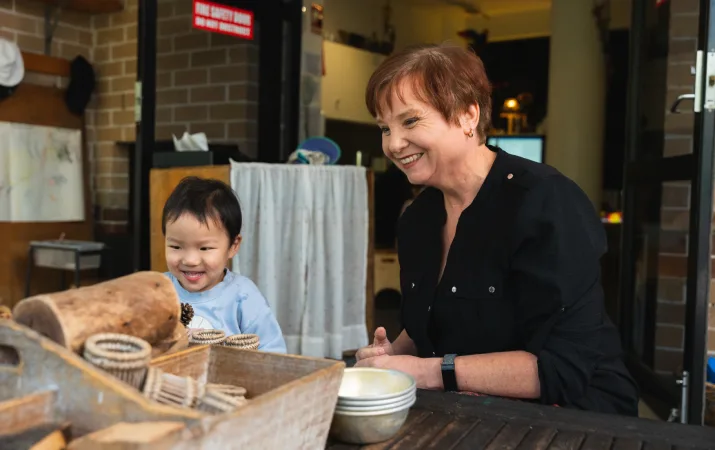
Sheila Degotardi is the director of the Macquarie University Early Childhood Education Research Centre. She and her colleagues explore how to support the early childhood education sector as a whole.
“We are interested in issues to do with the workforce and how to support the workforce, and we're also interested in the early childhood education system and how to support reform in that system as well,” she explains.
Career opportunities in research
With a PhD in early childhood education under your belt, you can take an academic path or find a position in an advisory capacity in the private or public sectors.
Sheila says that, while some of those with PhDs do go into academia, “increasingly, big early childhood providers… they're employing people with PhDs in research roles or to support research within their organisations, but also in advisory roles as well.”
She’s also seen PhD graduates move into roles in government.
Mapping your career path as an early childhood educator
Your early childhood education journey can be as unique as you are. Follow these steps to put yourself on the right track:
If you’re just starting
- Check out short course options to explore the field and build your confidence. Try topics like inclusion, play-based learning, or child development to see what inspires you.
- Earn a Certificate III or Diploma in Early Childhood Education and Care to get your foot in the door.
- Progress to a Bachelor of Early Childhood Education if you want to become a qualified early childhood teacher.
- Get ready to start your career in early childhood education!
Don’t worry if you don’t have an ATAR or don’t meet typical entry requirements. Open Universities Australia is committed to providing study pathways for everyone.
If you want to take your career further
Already have an undergraduate degree in early childhood education?
- Take advantage of single subject study or short courses to upskill quickly and explore emerging trends in early childhood education.
- Consider a graduate certificate or graduate diploma if you want a specialised qualification in an area like inclusion and diversity, or family and community engagement.
- Earn a masters degree to explore senior opportunities in leadership, research or policy.
Take the first step towards the career you deserve
Find a course that helps you build a future doing what you love.
About the author

Janina Waldmann
Contributor
Janina Waldmann is a freelance writer working and living on unceded Gadigal and Bidjigal land. She’s currently in the final throes of a political science degree and spends her days writing, reading, and chasing her two small children.
FAQs about early childhood career pathways
What is a good career objective for an early childhood educator?
There’s no single career objective for early childhood educators. A good career objective aligns with your strengths, natural interests, and ambitions.
What qualifications do I need to start a career in early childhood education?
If you want to work in a childcare centre, you’ll need to hold at least a Certificate III in Early Childhood Education, but your job opportunities are broader with a diploma or bachelor-level qualification. As Annika explained, The Australian Children’s Education & Care Quality Authority requires at least half of daycare centre staff to hold a diploma-level qualification or higher to meet National Quality Framework Standards.
To move into related areas, like research or early childhood intervention, begin with a bachelor-level qualification in early childhood education or other related area.
What support is available for career changers who want to move into early childhood education?
To learn more about making a career change into early childhood education, get in touch with one of our dedicated student advisors. They’ll discuss your career goals, any existing qualifications or work experience you have, and help you map out your study journey.
Are there scholarships or government incentives to help me study?
Depending on your circumstances, you could be eligible for a full or partial early childhood education scholarship. Read our guide to available scholarships.
Many of the early childhood education courses available through Open Universities Australia offer government-supported places, so even without a scholarship, you’ll see some fee relief.
You may also be eligible to apply for a weekly Commonwealth Prac Payment to help cover your living costs while you're on your compulsory placements.
Visit our Commonwealth Prac Payment page to learn more.
What is the job demand for early childhood educators in Australia?
Early childhood education is one of the fastest-growing sectors in Australia, and every state and territory in the country is currently experiencing a shortage of appropriately trained and qualified staff in the sector.
The Australian Federal Government committed $5 billion to the early childhood education sector in the 2025-26 federal budget, some of which has been committed to expanding access to early childhood education for families across Australia. Increased access to childcare will lead to higher demand for suitably qualified daycare staff.