How to find the best online psychology course for you in Australia
By Samira KambojPublished on
Choosing an online psychology course can feel like standing in front of a very crowded menu. Where do you even look first? Student advisor Samira Kamboj is here to help you narrow it down.
How to choose the right online psychology course
The best online psychology course for you will depends on a few things, including your career plans, study history, available time and level of experience. Whenever someone asks me where to start, I recommend they think about these questions first:
- Are you hoping to become a registered psychologist, or are you interested in psychology for another reason?
- What is your highest level of previous study?
- How much time would you like to commit to a course?
- What work, family or life commitments do you need to accommodate?
- Do you have any experience working in mental health? If so, how many years?
Once you’ve got those answers in the front of your mind, I can help you narrow down your online study choices with universities from across Australia.
Find the best path for your situation
Choose which of these scenarios best describes you right now. This will tell you which course path I’m going to recommend, and which section of this guide is most relevant for you to read.
You are: | The best path for you is: | To learn more, jump to: |
New to university study and ready to become qualified | A Bachelor of Psychology | Starting a career in psychology |
Someone without an ATAR or strong academic results who wants to get qualified | An Undergraduate Certificate in Psychology | Starting a career in psychology |
Interested in switching to psychology from another field | A Graduate Diploma in Psychology | Changing careers into psychology |
Already working in a people-focused role and eager to build your psychology expertise | A short course, graduate certificate, graduate diploma or masters degree | Using psychology to advance your career |
Exploring the field for general interest | A single psychology subject | Exploring psychology before committing |
Starting a career in psychology
This is you if: You’re new to university and ready to work towards a future role in the field. You might be fresh out of Year 12 or bringing years of work and life experience.
From here, your best starting point depends on whether you want to become a registered psychologist, keep your career options open, or build your way into a degree.
I want to become a psychologist
Recommended: A Bachelor of Psychology or Psychological Science.
You can go with either option. What matters most is that it's accredited by the Australian Psychology Accreditation Council (APAC).
After you finish the bachelor degree, you’ll need honours, or an equivalent fourth year, followed by a Master of Psychology, before you can register as a psychologist. This full pathway takes at least six years of full-time study, so it worth knowing that’s ahead.
When I help students compare bachelor degrees, I encourage them to look beyond the university name. Check accreditation first, and whether the mix of subjects and electives interests you. Then think about how much certainty you want.
If you’d rather have your fourth year mapped out from the start, look for a degree with an integrated honours year.
Read more about psychology registration pathways
I want to work in mental health, but not necessarily as a psychologist
Recommended: A Bachelor of Psychology or Psychological Science.
These courses aren’t just for future psychologists. They cover a broad range of psychology subjects, meaning you graduate with skills that are valued in many roles, including human resources, recruitment, youth work, disability and community services, research, policy, marketing and customer insights.
Plus, if you do decide to become a registered psychologist later, it will keep that door open.
Read more about psychology jobs and career pathways
I want to study psychology, but don’t meet the entry requirements
Recommended: An Undergraduate Certificate in Psychology or Psychological Science.
I love making people aware of this short qualification, which has low to no entry requirements and makes university much more achievable for everyone.
The certificate is made up of four foundational subjects, which can be used to secure your entry into a psychology bachelor degree.
Some undergraduate certificates focus entirely on psychology, while others include a mix of psychology and university preparation subjects to help you build confidence before taking on the full degree.
Read more about pathways into a psychology degree

Changing careers into psychology
This is you if: You’ve built a career in a different field, but you’d like to pivot into a psychology role. Your next step depends on whether you want to become registered or move into a psychology-related field more broadly.
I already have a bachelor degree in another field and want to become a psychologist
Recommended: An APAC-accredited Graduate Diploma in Psychology or Psychological Science.
The good news is you don’t need to start from scratch. If you already have a bachelor degree in another field, an APAC-accredited graduate diploma can satisfy the first step in the sequence towards becoming a psychologist.
It acts as a bridge into honours, or an equivalent fourth-year psychology program, and beyond.
Just make sure the course is accredited by APAC. Not all graduate diplomas in psychology are, because some are designed for professional development only. If you’re unsure, you can ask me or another student advisor to check.
Read more about psychology registration pathways
I already have a bachelor degree in another field and want to move into a psychology-related field
Recommended: A Graduate Certificate in Psychology.
This can be a good path to take if you want to move into a role that would benefit from psychology knowledge, without starting another bachelor degree.
You’ll build knowledge in human behaviour, motivation and mental wellbeing, which can support roles in leadership, HR, education, community services, wellbeing, marketing or customer experience.
Most online graduate certificates are designed for part-time study, which can be ideal for working professionals. Depending on the university, your subjects may also count towards further postgraduate study.

Using psychology to advance your career
This is you if: You already work in your dream field, but want to deepen your understanding of psychology, develop specialist knowledge or take a big step up.
The right option depends on how much time you want to commit to study, and whether you need a formal qualification.
I want to build psychology skills quickly
Recommended: A short course in psychology or mental health.
This is the best choice if you're short on time or want to develop practical knowledge in a specific area without committing to a longer qualification.
Most short online university courses can be completed in around 10 to 13 weeks and are designed to fit around work and other commitments.
I want a recognised qualification
Recommended: A Graduate Certificate or Graduate Diploma in Psychology, or a specialised area of psychology or mental health.
I suggest one of these courses if you want something more formal than a short course, but not as intensive as a masters degree.
You can study areas like business psychology, case management or counselling, while earning a recognised postgraduate qualification you can apply in your current role.
These courses typically require a bachelor degree in any discipline for entry and are designed for part-time study alongside work.
I want to become a specialist or leader
Recommended: A masters degree in an area of psychology or a related field.
This option suits people who already have many years of professional experience in an area like healthcare, business or education, and want to understand an area of psychology at an advanced level.
Online psychology masters degrees tend to be research-focused, so expect to build skills in critical thinking, evidence-based practice and research methods. This can help you lead projects or take on more complex work in your field.
Just remember that the Master of Psychology is different and only available to those on the path towards psychology registration.

Exploring psychology before committing
This is you if: You’re interested in psychology, but not sure it’s the right direction for you.
There are a couple of ways to try the discipline out before signing up for a qualification.
I want an introduction to psychology only
Recommended: A single psychology subject.
This is a low-risk way to experience university online and discover what psychology is really like.
One of the things I like about single subjects is the variety available. You can study all sorts of topics, from consciousness, personality and motor development to specific areas like sports psychology, conservation psychology and health psychology, which is a nice way to get a feel for a future specialisation.
If you enjoy it, you may be able to count your study towards a degree later.
Read more about how single subjects work
I’m not sure I’m ready to study psychology
Recommended: An enabling course.
It’s totally normal to feel like you’re not "academic enough", especially if it’s been a while since you studied. If you’re leaning this way, I recommend an enabling course.
Psychology degrees involve more research, writing and statistics than many people expect. An enabling course gives you the chance to build those skills before you start, so you can begin a degree with confidence.
Compare online psychology degree options
Hopefully, you now have a better idea of what you’d like to study.
But here’s a final a side-by-side comparison of the most common qualification types to help you make your decision.
Qualification | Best if... | Typical study time | Previous university study required? | Can it lead to psychologist registration? |
Undergraduate certificate | You don't meet entry requirements | 6 months full time | No | No, but it can lead into a bachelor degree |
Bachelor degree | You're starting your psychology career | 3-4 years full time | No | Yes, if APAC accredited |
Graduate certificate | You already have a degree and want practical psychology skills | 6 months full time | Yes | No |
Graduate diploma | You already have a degree and want to either upskill or become a psychologist | 1-2 years full time | Yes | Some do. Check for APAC accreditation if registration is your goal |
Masters degree | You want specialist or leadership roles | 1-2 years full time | Yes | No, unless it's an APAC accredited Master of Psychology |
Need help choosing the right online psychology course?
I know choosing an online psychology course can feel like a big decision, but you don’t have to make it on your own.
If you’d like a second opinion before you enrol, book a consultation to chat with me or one of my fellow student advisors. We can help you turn a long list of options into a clearer next step. Because we’re a not-for-profit that exists to help you get into uni, our advice is completely unbiased.
About the author
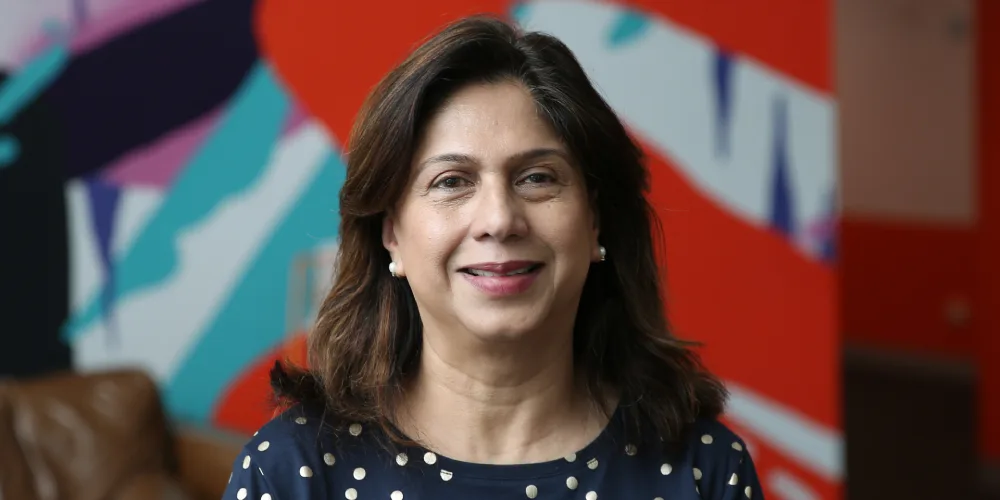
Samira Kamboj
Student advisor specialising in psychology courses
Samira Kamboj is our specialist in psychology course advice at Open Universities Australia. After returning to university as a mature-age student herself, Samira understands the difference education can make and is passionate about helping students from all backgrounds create new possibilities through study.
FAQs about online psychology courses
Is the highest-ranked university always the best choice for psychology online?
Not always. A university’s reputation is worth considering, but it won’t tell you what it's like to study their courses online.
Once you’ve checked APAC accreditation, compare practical details like assessment types, whether there are any live classes or in-person expectations, when study periods start and end, and how much flexibility you have to reduce or increase your study load.
The “best” university isn’t always the highest-ranked one. It’s the one with the online course structure that suits the way you need to study.
What’s the best online psychology course if I want to keep my options open?
If you may want to become a psychologist later, choose an APAC-accredited bachelor degree. It keeps the pathway to honours, postgraduate study and registration open.
If you already have a bachelor degree in another field, look at an APAC-accredited Graduate Diploma in Psychology instead.
You don’t need to know your exact career end goal yet. Just make sure the course you choose doesn’t close off the next step.
What’s the best online psychology course if I studied psychology years ago?
If you completed psychology study years ago and now want to continue towards registration, check whether your previous study is still considered current.
Some universities require accredited psychology study to have been completed within the past 10 years if you want it to count towards the next stage of the pathway, such as honours or an equivalent fourth year.
If your psychology study is too old to count, you may need to refresh your qualifications through an APAC-accredited Graduate Diploma in Psychology before moving forward.