How to switch to counselling mid-career
By Chloe CannPublished on
From study pathways to tips from a counsellor who’s already taken the leap, here’s everything you need to know about becoming a counsellor later in life.
Is counselling a good mid-career move?
For the right person, absolutely. And it turns out that it’s a popular mid-career move: the average age of entry into counselling is approximately 43, according to the 2024 Australian Counselling Association (ACA) Workforce Census.
With significantly more life and workplace experience by mid-life, and the rise of the mid-career ‘itch’ making people question their career choices, it makes sense that some suddenly feel drawn to the profession.
Such was the case for Sandrine Lonchampt, a grief counsellor and psychotherapist based in Sydney, who retrained at 45.
After completing a masters in architecture in her native France, Sandrine worked on projects across several parts of the world, focusing on local and vernacular building traditions, sustainable design and emergency response.
“And then I had my children,” she explains. “And because I worked in architecture in a way that was not very lucrative, I decided … to raise them when they were little. Then I got interested in education, Montessori education. And I became a Montessori guide.”
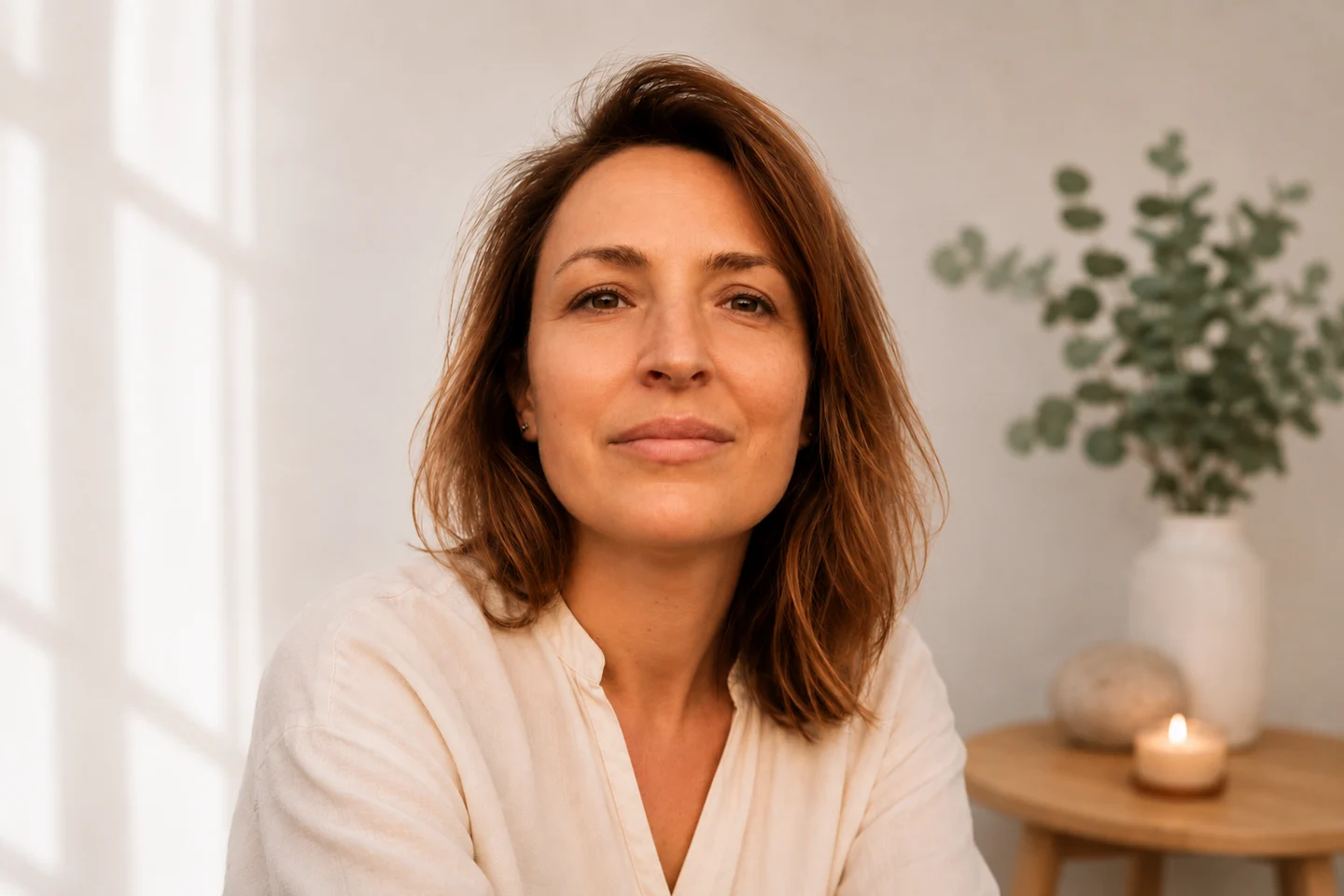
Sandrine worked as a Montessori educator in Australia and later ran an art studio in Sydney, where she also taught classes. Throughout all these roles there seemed to be one common thread that Sandrine kept returning to.
“It was all about people, communities,” she explains. “I did my degree with a major in sociology, so already people mattered more than the buildings to me. And I wanted to help people more intentionally.
So slowly but surely, I started to think, how can I really, really help people? Because my entire life I wanted to help, but it was always very superficial: I couldn't really go into the depth of things.
“Just after COVID, that's where I started to really think ‘I want to understand how the mind works: why people get depressed, why people can't communicate with each other, and what really is going on.’”
Why do people become counsellors?
Sandrine’s personal experiences of loss and grief, and her exposure to both in other communities, led her to specialise in the area. She now offers individual therapy sessions via telehealth through her private practice.
Like many others in her profession, Sandrine has gained a sense of purpose and fulfilment from becoming a counsellor. “I feel that my work matters, that what I do matters,” she says.
“When people come to you and they don't have any more hope, and then they [do the work and] start to have a little bit of hope again; that's incredibly moving to witness. It really is a privilege to walk alongside those people, and that is the reason why we do that work.”
According to the 2024 Australian Counselling Association (ACA) Workforce Census, the majority of counsellors are motivated by a desire to make a difference (85%), and personal experiences also play a significant role, with 55% citing lived experiences as a motivation for joining the profession.
What skills can you bring from your current profession?
Mid-career professionals inevitably bring a number of transferable skills along with them. “When we decide to change paths around 40 or 50 years old, we have a few years of living behind us,” Sandrine notes.
No matter where you’re coming from, everything that has been done in your previous jobs is just going to add lived experience and understanding. We are talking about a job where 90% of the work is to sit and be present for people who are in pain, and to listen to them deeply.
Sandrine’s experiences of teaching and running an art studio prepared her well for working independently, she says: “I was talking with parents, taking care of children, preparing curriculums. That’s the reason why I'm feeling very comfortable in private practice.”
As for who a career in counselling might suit, Sandrine has a few ideas on the soft skills necessary to succeed. “I think listening is the most important skill,” she says. “It's about really focusing and listening to what people have to say, because most of the time they are not heard. Empathy is important.”

How do I transition to counselling mid-career?
Taking that first step in a new direction is often the hardest. But Sandrine found a way to make it feel a little less daunting.
“It started to get under my skin that I wanted to go back to university,” she says.
I've always loved studying, so I started to really think about it, and one day I decided, well, let's start somewhere: instead of starting with a masters, maybe I could do a diploma.
Sandrine studied online for a year completing a Diploma of Mental Health. “I absolutely loved it,” she says. “So I continued with a Diploma of Counselling. And the more I learned, I was just like, ‘Oh, I'm going back to university’. So I did the grad dip, and then the masters.”
Sandrine’s return to university took some adjustment, particularly because it was the first time she’d studied in a language other than her mother tongue, French.
“At first, it was very hard,” she says. “I was 45 years old when I went back. I was feeling very rusty.” And while Sandrine initially found the learning curve “steep”, she notes that the support available from the university proved a huge help.
Counselling pathways at a glance
There are numerous pathways into counselling. In Australia, the most common qualification held by counsellors is a postgraduate qualification, Jobs and Skills Australia reports, which includes:
The qualification you need also depends on which professional body you want to register with too:
- ACA accepts the Diploma of Counselling level (or higher)
- PACFA (the Psychotherapy and Counselling Federation of Australia) requires bachelor-level (or higher)
While registration with a body isn’t compulsory in counselling, it is recommended and expected by many employers. Most ACA- and PACFA-accredited courses include a practical placement.
All of the following courses available through Open Universities Australia (except for the graduate certificate) are accredited by ACA:
- Graduate Certificate in Counselling — Torrens University
- Graduate Diploma in Counselling — University of Tasmania
- Bachelor of Counselling — University of New England (includes 360 hours of fieldwork placement)
- Bachelor of Counselling — Southern Cross University (includes 200 hours of placement, plus compulsory residential workshops in Lismore or the Gold Coast)
- Master of Counselling — Torrens University (40 hours work placement)
How long does it take to switch into counselling?
The time it takes depends on the qualification and whether you study full-time or part-time.
Qualification | Full-time duration | Part-time duration | What to keep in mind |
Graduate certificate | 6 months | Around 1 year | A graduate certificate alone generally won’t meet the qualification requirements for professional registration with ACA or PACFA. |
Graduate diploma | 1 year | Around 2 years | Check whether the course is accredited and designed as a pathway into professional counselling practice. |
Masters degree | 1.5 years | Around 3 years | Entry requirements and course length vary depending on your previous qualifications. |
Bachelor degree | 3 years | Around 6 years | Part-time study can make it easier to manage other commitments while changing careers. |
A graduate certificate is the shortest option, but it may be better suited to building introductory knowledge or testing your interest in the field than qualifying to practise as a registered counsellor.
Learn more about alternative pathways you can take if you don’t meet entry requirements for a counselling degree.
Can you study counselling while working?
Sandrine was in the fortunate position of not needing to work while studying. She did, however, start to build a small client base for her private practice while halfway through her masters degree.
Whether you can study and work at the same time will depend on your personal circumstances, study load and course requirements.
But the benefit of studying online is that the courses are typically designed to fit around your life, and most can be structured as part- or full-time to suit your schedule.
The biggest practical challenge may be completing placement hours, which are required in many bachelor and masters counselling programs.
Open Universities Australia's student advisors can help you figure out what kind of course might be the best fit by looking into:
- whether classes are live or self-paced
- whether the course includes a placement
- whether you can reduce your study load or take breaks between study periods
- what the fees are and whether you're eligible for a government loan

Challenges to consider before switching into counselling
A career in counselling can be rewarding and meaningful, but as with any job, there are some potential challenges to consider.
Counsellors are exposed to a heavy emotional load, regularly supporting clients with issues such as trauma, grief, abuse, addiction and family conflict. As such, Sandrine notes that taking self-care seriously is essential.
It's a very very demanding job. So if you don't take care of yourself mentally, emotionally, physically it can go sour really quickly.
Another aspect to consider is whether private practice would be the right move for you. While it can provide a flexible schedule, Sandrine says that working from home and doing one-on-one telehealth sessions can be isolating at times.
She adds that running your own business can come with downsides too, from trying to find clients when you’re starting out to managing all the behind-the-scenes admin.
What to expect from a career in counselling
There’s a huge variety of roles available in counselling. You might choose to work for yourself or in a school, hospital, community service or not-for-profit organisation.
Counsellors can also specialise in a number of different areas, such as gambling, drug or alcohol addiction, pregnancy loss, cancer support, child and adolescent counselling, suicide prevention, and family violence.
And once you’ve gained experience in the sector, there are opportunities to move up the ladder and into roles such as a program manager, clinical lead, educator, researcher, or policy adviser.
Explore your study options through us
If a career in counselling feels like it could be a good fit, you can explore online counselling courses from different universities through Open Universities Australia. We’ll help you find a pathway into the field, no matter where you’re starting from.
Still thinking about what might suit you? Try Help Me Choose for personalised course recommendations.
About the author
Chloe Cann
Contributor
Chloe Cann is a Melbourne-based journalist and editor with more than a decade of experience in the industry. She holds a masters degree in journalism from a London university and has contributed to magazines, newspapers, and websites across Australia, England, Cambodia and the US, including Lonely Planet, National Geographic Traveller and Condé Nast Traveller.
FAQs about switching careers
Do I need a psychology degree to become a counsellor?
No, you don’t need a psychology degree to become a counsellor in Australia. The usual pathway is to study counselling itself, through recognised qualifications such as:
- A Bachelor of Counselling
- A Graduate Diploma in Counselling
- A Master of Counselling
A psychology degree is the pathway toward becoming a psychologist, which is a separately regulated profession. Read our comparison between psychology and counselling to learn more about the differences.
Am I too old to make a career change into counselling?
Absolutely not. In fact, the average age of entry into counselling is approximately 43, according to the 2024 Australian Counselling Association (ACA) Workforce Census. The study also states most counselling professionals are aged between 41 and 60 (59%), and only 13% are under 30.
Is there demand for counsellors in Australia?
Employment within the sector is projected to rise from about 34,000 in May 2025 to 38,500 in May 2035; that’s an increase of 4,500 jobs, or 13% over ten years, according to Jobs and Skills Australia.
More broadly, the government agency also reported workforce shortages across Australia’s mental health sector: based on 2019 data published in 2023, the workforce is estimated to be 32% below the level required.
Can I work for myself?
Many do. The ACA Workforce Census found that 36% of respondents were self-employed counsellors, and a further 19% combined a salaried counselling job with their own private practice.
A PACFA Workforce Survey (2020) found that 57% of its counsellors and psychotherapists surveyed were self-employed.