What does a counsellor do?
By Sarah VercoePublished on
Whether you’re exploring counselling for the first time or considering a career change, this guide is a great place to start. Learn what a counsellor does, who they work with, and whether it’s the right career for you.
What is the main role of a counsellor?
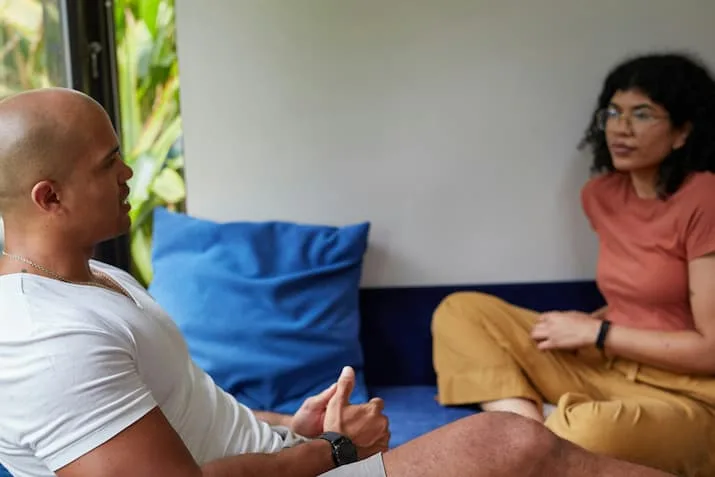
The main role of a counsellor is to create a safe space where people can say what they haven't been able to say elsewhere, and help them make sense of it.
Counsellors listen without judgement, ask thoughtful questions and guide clients through their thoughts, emotions and experiences, whether they're grappling with grief, trauma, anxiety, relationship breakdowns, identity questions, addictions or a major life transition.
Whatever brings someone to counselling, they need more than information or advice. They need a trained professional who can help them understand their own experience and find a way forward.
“You have to really care about people and be willing to do the work on yourself to be able to maintain curiosity and hold what they're going through,” explains Jane Kennedy, a Sydney-based counsellor who specialises in religious trauma and rebuilding of identity.
Explore our introduction to counselling to learn more about the field and how it supports people.
Key responsibilities
So, what does a counsellor do in Australia? While every day is different and the role varies depending on the setting and specialisation, most counsellors spend their time supporting clients through therapeutic conversations, developing treatment plans, keeping clinical records and working alongside other health professionals when needed.
Here’s an overview of a counsellor’s key responsibilities
Conducting sessions
This is the primary work of a counsellor. It involves meeting with clients individually, in couples, or in groups, to explore why they’re seeking help. Sessions are usually around an hour and occur weekly or fortnightly depending on the level of support required.
Assessment and intake
Before therapy can begin, counsellors assess a client’s needs, their history, and goals moving forward. This is what helps inform the direction of treatment, and can also help identify if the client would benefit from further referral.
Treatment planning
Counsellors develop and review goals with clients, adjusting their approach as the client progresses and adapting to things that emerge in sessions.
Case notes and documenting
After every session, a counsellor makes clinical notes. These are records of what was covered during a session, any risk factors observed, and the plan going forward. This is one non-negotiable of counselling.
Referral and coordination
When a client’s needs go beyond the expertise or scope of a counsellor, they must refer the client on to other professionals, such as psychiatrists, social workers, GPs or community services.
Supervision and professional development
Counsellors attend clinical supervision, a professional process that allows them to reflect on their work with a more experienced practitioner. It’s considered essential to good practice and isn’t optional.
Wondering what these responsibilities look like in real life? Read about the day in the life of a counsellor.
Or you might like to understand how a counsellor differs to a psychologist.
How the role can vary
No two counsellors do the same work. The role shifts depending on specialisation, seniority and setting.
A counsellor working in a school looks very different to one working in a drug and alcohol rehabilitation facility, and both look different from someone running a private practice focused on trauma recovery.
Likewise, a counsellor in a community health organisation might carry leadership responsibilities, supervise junior staff, or contribute to program development alongside their clinical work.
Jane says that specialising, while it might initially feel restricting, is actually a strength. “At first, it feels like having a niche will be restrictive, but it will actually make you stand out,” she says. “People are looking for what they need online using specific language.”
Read more about the different counselling specialisations you can pursue.
Who do counsellors work with?
One of the most appealing parts of a counselling career is the variety of people you can support.
Counsellors work with:
- Individuals in all stages of life, including children, adolescents, adults and older people
- Couples and families navigating relationship difficulties or major transitions
- Communities experiencing trauma, disaster or systemic disadvantage
- People in crisis, including those experiencing suicidal thoughts, domestic violence or acute mental health episodes
- Workplace populations through Employee Assistance Programs (EAPs)
- Specific groups such as First Nations peoples, LGBTQI+ communities, people living with disability or those recovering from addiction
There’s no single type of person counsellors work with, it’s more that the caseload reflects the setting and the specialisation they’re in.
Where do counsellors work?
Because counsellors are employed across a wide range of environments, where they practice varies. Common workplaces include:
- Private practice, either as a sole trader or within a group practice
- Community health centres
- Mental health services
- Hospitals
- Allied health clinics
- Schools and universities
- Correctional facilities
- Employee assistance programs
- Non-government organisations
- Community services, such as domestic violence and sexual assault or drug and alcohol rehabilitation
Some counsellors also combine settings. Jane says she divides her week between seeing clients in person and online. “I do two days a week this way and three at home online," she says.
Jane says she eased into private practice too, rather than diving in all at once, working part time for a crisis line during the first year so she could build her practice gradually.
Explore our guide to counselling jobs and career pathways to dig even deeper into what workplaces are like.

What skills do counsellors use?
Successful counsellors rely on a range of counselling skills to build trust, support clients and navigate complex situations. Some of the most important skills include:
Active listening
More than hearing words, active listening is about tracking tone, body language, what’s being avoided and what’s underneath what is being said.
Empathy
The ability to understand and empathise with another person’s experience without projecting your own.
Reflective practice
Turning the same curiosity inwards while understanding your own reactions, biases and blind spots so they don’t interfere with the work.
Communication
Asking the right questions at the right time and knowing when to speak and when to hold silence.
Ethical reasoning
Navigating complexity requires sound professional judgement, including confidentiality obligations, mandatory reporting, dual relationships and scope of practice.
Resilience and self care
Counsellors risk blurring the lines between professional and personal life. Staying resilient requires an intentional self-care routine where rest and personal wellbeing are factored in.
If these are skills you’d like to build, explore the study and training involved in becoming a counsellor.
How do counsellors maintain their skills?
Qualifying as a counsellor isn't the end of the learning process. Throughout their careers, counsellors continue developing their knowledge and skills to keep up with new research, therapeutic approaches, ethical standards and best practice.
Many counsellors are registered with professional bodies such as the Australian Counselling Association (ACA) or the Psychotherapy and Counselling Federation of Australia (PACFA), which require members to complete continuing professional development (CPD) and regular professional supervision.
As Jane puts it:
Good supervision is essential to be a good counsellor, as is having your own regular therapy. I really believe this is non-negotiable for our own growth and knowing what pushes on our bruises and is likely to be hard for us.
What does a counsellor not do?
Understanding the boundaries of counselling is just as important as understanding what the role involves.
Counsellors are not psychologists
In Australia, the title psychologist is legally protected and requires registration with the Psychology Board of Australia. While the roles can overlap in some areas, they involve different training pathways and scopes of practice.
Learn more about what’s involved in becoming a psychologist.
Counsellors do not prescribe medication or provide medical diagnoses
These responsibilities sit with GPs and psychiatrists, although counsellors may work alongside these professionals as part of a broader care team.
They also don’t tell clients what to do or make decisions for them
Instead, counselling is grounded in client autonomy, supporting people to explore their options and make their own informed choices.
A common misconception is counselling is simply a supportive conversation, or that if you’re a good listener, you’ll be a good counsellor.
In reality, qualified counsellors bring specialist training in therapeutic approaches, ethics and human behaviour. The ability to facilitate meaningful change through conversation is a professional skill developed through training, supervision and ongoing professional development.
Is a career as a counsellor right for you?
Counselling can be a rewarding career, but it isn’t the right fit for everyone.
The best counsellors are empathetic and curious, observant enough to notice what isn't being said, and reflective about their own reactions. They're comfortable sitting alongside people through uncertainty, without needing to fix things. Jane says:
You have to really care about people and be willing to do the work on yourself to be able to maintain curiosity and hold what they're going through. I had to really let go of saviourism and acknowledge I can't fix or rescue anyone.
Explore your study options through us
If a career in counselling feels like it could be a good fit, you can explore online counselling courses from different universities through Open Universities Australia. We’ll help you find a pathway into the field, no matter where you’re starting from.
Still thinking about what might suit you? Try Help Me Choose for personalised course recommendations.
About the author

Sarah Vercoe
Contributor
Sarah Vercoe is a Queensland-based writer bringing lifestyle, education, and human-interest stories to life for national publications and non-profits. When she’s not writing, she’s lost in a book with her cat by her side.
FAQs about the role of a counsellor
How do counsellors maintain professional boundaries?
Training and supervision teach counsellors to notice when a boundary is at risk, whether that's a client relationship becoming personal, getting too emotionally caught up in someone's situation, or being asked to help with something outside what they're trained for. Professional bodies also set out codes of conduct that counsellors are expected to follow.
Can counsellors work with clients they know personally?
Generally, no. Seeing a friend, family member, or someone you're already close to professionally is considered a conflict of interest, and it's usually not appropriate. This can be trickier for counsellors working in smaller communities, so they're trained to handle it carefully and refer the client on to someone else if needed.
Do counsellors need supervision throughout their careers?
Yes. And not just while training. Supervision stays part of the job for as long as you're practising. It gives counsellors a regular space to reflect on their work, talk through the emotional weight of it, and make sure they're still showing up well for clients.
Can counsellors run their own private practice?
Yes, plenty do, either on their own or alongside other roles. It usually takes some time and planning to get there, though. Jane says her approach to getting started in private practice was to save enough to cover four months of expenses before going out on her own, and working part-time on a crisis line while she made the transition. She's since branched out into online courses and group programs, too.