What is counselling? Your introduction to the field
By Sarah VercoePublished on
If you’ve ever wondered whether a career in counselling could be the right fit for you, this guide is a great place to start. We detail exactly what counselling is, how it works in practice and where it could take you.
What is counselling?
Counselling is about helping people work through whatever is making life challenging. That might be anxiety, grief, major life change, a relationship breakdown, burnout, or even something that's harder to name, like a sense that things aren't quite right.
So, what is the main purpose of counselling? It's about helping people better understand themselves, including their thoughts, feelings and behaviours, so they can navigate those challenges and improve their wellbeing.
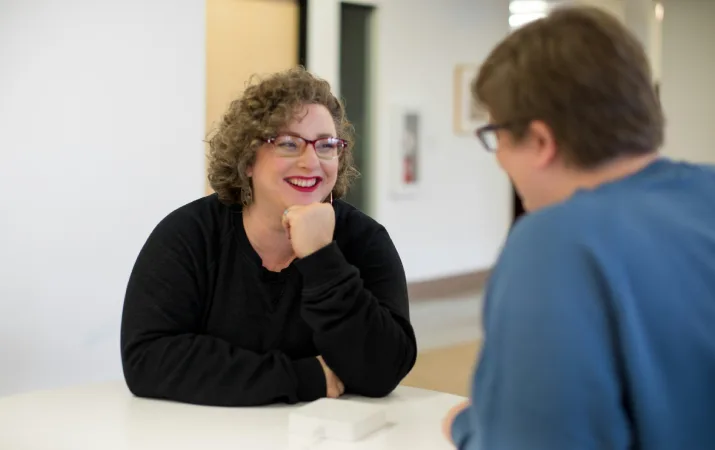
A trained counsellor creates a safe, supportive space where clients can talk openly, make sense of their experiences, and find a way forward.
This isn't a career built around giving advice or telling someone what to do. True counselling is a skilled, guided conversation that helps people develop the insight and tools to heal, cope, navigate and grow through whatever brought them there.
What does counselling involve?
Talking and listening with purpose
Stripped back, how counselling works is through conversations that help clients better understand themselves and develop practical ways to move forward. There are a range of counselling approaches, but all counsellors are trained to actively listen without judgement and with the goal of helping their clients gain insight into their thoughts, feelings and behaviours.
Evidence-based approaches and frameworks
Counsellors draw on a range of theoretical frameworks. Which approach or framework they use in practice depends on the client and the situation. Some of the most common include:
Cognitive Behavioural Therapy (CBT)
Focusing on identifying and changing unhelpful thought patterns and behaviours, it’s widely used to help with anxiety, stress and depression.
Person-centred therapy
Developed by Carl Rogers, an early influence in humanistic psychology, person-centred therapy places the client at the centre of the process. The counsellor’s role is to offer empathy, acceptance and presence, which helps create an environment where the client can grow.
Narrative therapy
Helping clients examine the stories they tell about themselves and their lives while rewriting the ones that are holding them back. Narrative therapy can be particularly useful for identity work and recovery from trauma.
Dialectical Behaviour Therapy (DBT)
Originally developed for borderline personality disorder, DBT is now also used to help people regulate their emotions, manage distress and improve their relationships.
Somatic and body-based approaches
This recognises that trauma and emotional pain are held in the body as well as the mind. Techniques include breath work, movement and nervous system regulation alongside talk therapy.
Counselling approaches vary with many counsellors using an integrative approach, drawing from multiple frameworks based around what each client needs rather than applying a single method to all.
Assessment and goal setting
Typically, counselling begins with the counsellor getting to know the client so they can understand their reason for seeking therapy, then collaborating with them on what they’d like to achieve.
Goals might be broad, like feeling less overwhelmed, or specific, like developing strategies to manage panic attacks.
Over time, a client’s progress is reviewed and adjusted as needed.
Boundaries and ethics
Counsellors work within an ethical framework that requires them to maintain confidentiality, avoid dual relationships, practice within their competence, and seek supervision if and when it’s needed.
Why is counselling important?
Counselling helps people manage life's challenges, strengthen their mental wellbeing, and develop healthier ways of thinking, coping, and relating to others.
How counselling helps will look different for each person, but it can have a positive impact across every stage of life.
Supporting mental health across the lifespan
Each year, one in five Australians will experience a mental health condition and counselling is one of the most accessible and widely used forms of support. It’s suitable for people of all ages, from adolescents navigating school and identity to older adults managing transition or loss.
Responding to trauma and crisis
Working with people who have experienced domestic violence, sexual assault, natural disaster, grief, abuse, and more, counsellors are at the frontline of trauma support. In fact, trauma-informed practice is one of the fastest growing areas within the profession.
Strengthening relationships and families
Outside of individual work, couples counselling, family therapy and child and adolescent counselling are just some of the areas that help with relational mental health.
Supporting wellbeing in workplaces and communities
Employee Assistance Programs (EAPs), community health centres, schools and aged care facilities all employ counsellors to support the people they serve. Often, counselling is incorporated into the systems that hold communities together.
Addressing addiction and complex needs
Alcohol and drug counselling, crisis counselling, and work with people experiencing homelessness or financial hardship are all areas of specialisation for counsellors, which require specific training and skills.

Where can counselling take you?
From private practice to community organisations, schools to hospitals and beyond, a counselling qualification can be the first step on the path to many different careers. It’s common to build a niche around a particular issue or population, but it’s also possible to work in a generalist role spanning multiple areas, too.
Some of the most common career directions include:
- Counsellor
- Mental health worker
- Case manager
- Youth worker
- Family support worker
- Employee assistance counsellor
Explore more counselling jobs and career pathways in Australia to discover the different ways you can support others.
How can you get started in counselling?
If you're curious about a career in counselling, many people begin by diving a little deeper into the topic before committing to formal study.
Reading about different counselling approaches, career pathways and the different areas of specialisation that are available are all great ways to figure out if counselling feels like the right fit.
Some people also choose to complete a short course as a way of exploring the field before taking the next step with a degree. If you'd like to learn more about counselling, explore our guides on:
Explore your study options through us
To see what’s out there, you can compare online counselling courses from different universities through Open Universities Australia. We make it simple to explore your options, apply and get started, while your university delivers and awards your qualification.
If you’re still weighing things up, try Help Me Choose for personalised course recommendations or get in touch with a student advisor to find out which course could be right for your goals.
About the author

Sarah Vercoe
Contributor
Sarah Vercoe is a Queensland-based writer bringing lifestyle, education, and human-interest stories to life for national publications and non-profits. When she’s not writing, she’s lost in a book with her cat by her side.
FAQs about counselling
Is counselling the same as therapy?
The terms are often used interchangeably, and there's significant overlap. In Australia, counselling generally refers to a collaborative process that helps people navigate life's challenges and improve their wellbeing. Psychotherapy often involves deeper exploration of longstanding emotional or psychological patterns, though the distinction isn't always clear-cut and varies between practitioners.
Is counselling only focused on mental health?
Not at all. While counselling is closely associated with mental health, it also supports people through life transitions, relationship difficulties, career changes, grief, chronic illness, identity questions and more.
Is counselling considered a healthcare profession?
Counselling is part of Australia's broader allied health and mental health landscape. Counsellors work alongside psychologists, social workers, GPs and other health professionals in settings including private practice, community health, schools and hospitals.
Many counsellors choose to register with professional bodies such as the Australian Counselling Association (ACA) or the Psychotherapy and Counselling Federation of Australia (PACFA), which set professional and ethical standards for the profession.