Counselling jobs and career pathways in Australia
By Sarah VercoePublished on
From direct counselling jobs to other career pathways, a counselling qualification can open up work across a wide range of settings.
Where can a counselling qualification take you?
A counselling qualification can take you in more directions than the obvious ones, and the careers it leads to don't all look the same.
Some are direct counselling roles: working therapeutically with clients as a counsellor or psychotherapist, in settings from private practice and community health to schools, workplace consultant, and mental health services.
Others are counselling-adjacent roles that draw on the same skills, like empathy, communication, ethical reasoning, an understanding of human behaviour, but involve more coordination, advocacy, or practical support than direct therapy. Case managers, family support workers, youth workers, and rehabilitation counsellors all fall into this category.
Knowing which type of role appeals to you is one of the most useful questions to sit with early on.
Associate Professor Carol du Plessis from the University of Southern Queensland says there’s strong demand across the mental health field in Australia. “There is a shortage of workforce across the mental health sector at the moment, and so there are many different types of roles available.”
Careers in counselling at a glance
Career title | Focus area | Typical work environment | Qualification level | Demand |
Counsellor | Individual or group therapeutic support | Private practice, community health, NGO | Postgraduate (Graduate diploma, Masters) | Strong |
Employee assistance counsellor | Short term counselling through work programs | EAP providers, corporate | Postgraduate (Graduate diploma, Masters) | Strong |
Drug and alcohol counsellor | Addiction support and recovery | Rehabilitation services, community health | Certificate to postgraduate | Strong |
School counsellor | Student wellbeing and mental health | Primary and secondary schools | Postgraduate (Graduate diploma, Masters) | Moderate - strong |
Rehabilitation counsellor | Supporting people with disability or injury | Compensation bodies, disability services, private practice | Postgraduate (Graduate diploma, Masters) | Moderate - strong |
Mental health worker | Broad mental health support and case coordination | Community organisations, hospitals | Undergraduate or postgraduate | Strong |
Youth worker | Support for young people facing disadvantage or crisis | Youth services, schools, shelters | Certificate to degree | Moderate - strong |
Case manager | Coordinating services and support for individuals | Community organisations, disability services | Undergraduate | Moderate - strong |
Family support worker | Practical and emotional support for families | NGOs, government services, child protection | Certificate to undergraduate degree | Moderate |
Crisis support worker | Acute mental health and crisis response | Crisis lines, hospital emergency, community outreach | Certificate to undergraduate degree | Strong |
Data sourced from Jobs and Skills Australia and Labour Market Insights.
Explore direct counselling roles
Counsellor
Counsellors work with individuals, couples, families and groups, helping people with issues including anxiety, depression, grief, trauma, relationship breakdowns and life transitions.
Learn how to become a counsellor.
Employee assistance counsellor
EAP counsellors provide counselling through workplace wellbeing programs, often for short periods. Sessions focus on stress, burnout, workplace conflict and personal challenges that may be affecting work. It’s varied work and suits counsellors who prefer brief, focused interventions.
Drug and alcohol counsellor
These counsellors work in rehabilitation services, community health or private practice, supporting people dealing with addiction and recovery. The work often involves complex presentations where mental health and substance use can overlap.
School counsellor
School counsellors work in primary and secondary settings supporting student wellbeing, providing counselling and referring on when needed. Requirements vary by state, and some roles also require a teaching qualification alongside counselling training.
Rehabilitation counsellor
Rehabilitation counsellors support people adjusting to injury, illness or disability, including planning to return to work and long-term adjustments. This is a more defined specialisation with its own professional body (the Australian Society of Rehabilitation Counsellors) and registration pathways.
Interested in practice areas such as trauma, grief, relationships or addiction? Read our guide to counselling specialisations.
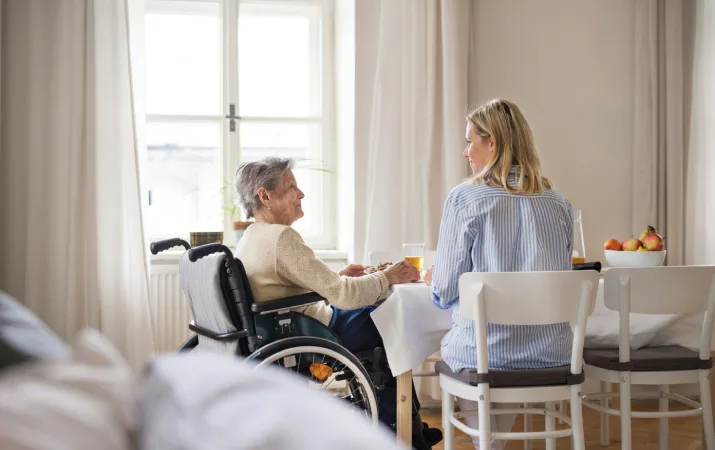
Explore counselling-adjacent careers
Mental health worker
Mental health workers support clients with the practical side of daily life, from routines and wellbeing to connecting with the right services. What that looks like day to day depends on the setting, most commonly community organisations, non-governmental organisations (NGOs) and government services. The role may draw on counselling skills without involving formal counselling sessions.
Youth worker
Youth workers support young people dealing with things like family breakdown, homelessness, mental health challenges, or the transition from school to the workforce. The role often combines practical support with therapeutic skills, which makes counselling training a strong fit.
Case manager
Case managers coordinate care for people with complex needs, including disability, mental illness, chronic health conditions or housing instability. It’s a mix of planning, communication and support across different services.
Family support worker
Family support workers assist families under pressure, often alongside schools, housing services or child protection systems. The work can be practical and emotional at the same time, supporting families through difficult or unstable periods.
Crisis support worker
Crisis workers respond to people in acute distress, whether through phone services, emergency departments or outreach services. It can be high-pressure work that requires strong emotional regulation. Many counsellors start in crisis roles early in their careers to build experience.
Industries that employ counselling graduates
Health and community services
Community health centres, mental health services, hospitals, NGOs and government agencies all employ counsellors and counselling-adjacent workers.
Education
Schools, TAFE institutes and universities employ people in counselling, wellbeing, accessibility and support roles. School counsellor roles in particular are in steady demand across most Australian states.
Corporate and employee assistance
With growing attention on workplace wellbeing, there is increasing demand for counsellors in corporate settings and employee assistance programs (EAPs).
Corrections and justice
Counsellors working in this space support people in prisons, youth justice services and community corrections programs. The work often involves rehabilitation, mental health support and helping people reintegrate into the community.
Academia and research
If you’re interested in contributing to the development of the profession, academic and research pathways are another option.
“There is a growing focus on research specific to the profession, and with that, careers in academia are another potential pathway,” Carol explains.
Where is demand strongest?
Carol says opportunities may be particularly strong outside major cities, where mental health services can be harder to access.
There are lots of opportunities in regional and remote Australia as these areas are often underserviced in terms of the mental health workforce.
For new graduates willing to relocate, these roles may also offer greater variety and responsibility early in their careers.

How to choose the right career path in counselling
Not sure which direction fits best? It often helps to start with the kind of work you can actually see yourself doing day to day.
Do you want to provide counselling directly?
Or would you prefer a role that combines practical support, advocacy, or service coordination? If the therapeutic relationship is what draws you to counselling, clinical roles in private practice, community mental health, or EAP are likely the right direction.
If you're equally energised by navigating systems, connecting people with services, and working across a broader caseload, counselling-adjacent roles like case management, family support, or youth work may suit you better.
Would you rather work independently or as part of a broader team?
Private practice offers autonomy but it also means you have to be more self motivated and be comfortable with a fluctuating income, especially in the early years.
Employed roles in community organisations, hospitals, or schools offers structure, working in a team environment, a stable income, and access to peer support and supervision, but it also comes with less control over your caseload and working hours.
Are you looking for a structured role or something with more flexibility?
Government and community organisations have clearly defined roles, with salary bands and career progression pathways. Private practice and contracting gives you more control over how and when you work, but the trade off is carrying all of the business responsibility yourself.
How much intensity feels manageable for you?
Some areas of practice carry regular exposure to crisis and trauma, such as child protection or acute mental health work. Others, like EAP or career counselling, are generally more contained and involve shorter periods of counselling. Both require skill, but they ask for different kinds of energy.
What are you already bringing with you?
There are plenty of mature-aged students who come into counselling with years of prior work experience, says Carol. “Many of them put their counselling skills to work in their existing settings, such as teaching or corporate work,” she says.
That experience can shape the direction you take next, especially if you’re building a niche over time.
Book a consultation with a student advisor to talk through your study options.
How can you start working towards a counselling career?
The path you take will depend on your previous study, experience and the type of counselling work that interests you.
- Use Help Me Choose for personalised course recommendations.
- Browse which counselling courses are offered online in Australia.
- Review alternative pathways that are available if you don't meet entry requirements
- Speak with a student advisor for help understanding fees, study planning and pathways
- When you’re ready, you can apply and enrol through Open Universities Australia.
Explore your study options through us
Compare online counselling courses offered by leading Australian universities.
The university delivers and awards the degree, and we're here to help you compare your options, understand entry pathways and feel confident about what you're choosing.
About the author

Sarah Vercoe
Contributor
Sarah Vercoe is a Queensland-based writer bringing lifestyle, education, and human-interest stories to life for national publications and non-profits. When she’s not writing, she’s lost in a book with her cat by her side.
FAQs about counselling careers
Are counselling jobs in demand?
Yes. Demand is strong across mental health, trauma services, community organisations and alcohol and drug services. Workforce shortages are particularly noticeable in regional and remote areas, where counsellors are highly sought after.
Can a counselling qualification lead to roles outside counselling?
Yes. “The skills counsellors learn can be used across a multitude of settings,” explains Associate Professor Carol du Plessis. Graduates often move into human resources, organisational development, education, policy, community services and leadership roles in the not-for-profit sector.
Are there regional and remote opportunities for counsellors in Australia?
There are, and they’re growing. Workforce shortages are more pronounced outside major cities, and telehealth has also made it easier for counsellors to work with clients across Australia without relocating.