What does a psychologist do?
By Claire BurkePublished on
Think you have a calling for psychology? Whether you’re a school leaver, contemplating switching careers, or looking to broaden your skillset, this guide explains the roles and responsibilities of a psychologist to help you decide if it’s a fit for you.
What is the main role of a psychologist?
Psychologists are experts in human behaviour, emotions and cognitive function, explains Associate Professor Jacqui Yoxall, Head of Psychology and Chair of Psychological and Social Health at Southern Cross University.
“Psychologists study how people think, feel, and behave, using this knowledge to improve wellbeing and help individuals, families, organisations, and communities thrive,” Jacqui says.
“Psychologists partner with people to better understand their experiences, identify what is contributing to their difficulties, and develop strategies that support meaningful and lasting change.”
Like all health professionals, psychologists are guided by a strict code of ethics, with a fundamental commitment to acting in their clients' best interests and doing no harm.
How psychology can vary
There’s no one-size-fits-all career when it comes to psychology. While many people think of psychologists as professionals who help people manage their mental health, Adelaide University Online Course Lecturer and practising psychologist Catherine Ng explains that’s only part of the picture.
"It's a profession you can really shape around the kind of work you want to do," she says.
In Australia, psychologists can specialise across nine areas of practice endorsement recognised by the Psychology Board of Australia.
These include:
- Clinical psychology
- Counselling psychology
- Clinical neuropsychology
- Community psychology
- Health psychology
- Educational and developmental psychology
- Forensic psychology
- Organisational psychology
- Sport and exercise psychology

The type of work a psychologist does depends on the area they work in.
Some psychologists work one-on-one with people to assess, diagnose and treat mental health conditions, support children with learning and developmental needs, or help athletes optimise their performance.
Others work at a systems level using human factors to design safer, more effective work environments, understand consumer behaviour, predict how different people respond under pressure, or inform public policy.
“Our work as experts in human behaviour underpins all those areas that psychologists work in,” Jacqui says. “It’s an incredibly diverse area.”
Learn more about the different psychology specialisations and which path might be right for you.
Who do psychologists work with?
Psychologists work with people from all walks of life, each facing their own unique experiences and challenges.
Whether supporting a child with developmental or learning needs, helping someone navigate their mental ill health, or supporting an organisation to improve productivity and wellbeing, psychologists build trust and tailor their approach to each person or group they work with. As Jacqui puts it:
One of the greatest privileges of being a psychologist is being invited into someone’s world – to listen without judgement, understand their experiences, and support them as they find a way forward.
Through their practice, psychologists might support:
- Children and teenagers
- Students
- Adults
- The elderly
- Couples and families
- People living with disability
- People recovering from illness or injury
- Athletes
- Employees and business leaders
- Veterans
- People involved in the justice system
- People needing career guidance or transitioning into new careers
Trying to choose between psychology or counselling? Read about how the two careers compare.
Where do psychologists work?
A psychology qualification can open doors across a range of work settings, says Catherine. “Psychology offers so many different career pathways,” she says. “You can work across government, private practice, not-for-profit organisations and business – it’s a profession that can take you into almost any industry.”
Some of the workplaces where psychologists put their skills into practice include:
Work setting | Type of work |
Private practice | Providing therapy, assessments and diagnosis |
Hospitals | Supporting patients through illness, injury or rehabilitation |
Schools | Supporting students, families and educators |
Community health | Delivering mental health assessment and intervention, case management |
Businesses | Improving leadership, wellbeing and workplace culture, training and development |
Government | Advising policy and organisational practice, conducting projects |
Defence | Supporting performance, human factors and research |
Universities | Teaching and conducting research |
Sporting organisations | Supporting performance, resilience and wellbeing |
Justice system | Conducting forensic assessments and rehabilitation |
Learn more about psychology jobs and career pathways in Australia.
What skills do psychologists use?
Psychologists rely on a diverse set of theoretical and technical knowledge, analytical thinking and interpersonal skills through their practice. Active listening, communication and rapport building skills are essential, says Catherine, as well as the ability to analyse complex situations and tailor evidence-based strategies to each person's needs.
Listening and validation skills are the most important because if the client doesn't feel heard, they’re not going to come back. Building rapport and interpersonal skills are very important. Then you need the ability to think on your feet, ask more questions, explore what’s going on and come up with strategies that can help.
Also important are the professional skills psychologists rely on to practise ethically and effectively. Jacqui says self-awareness, sound professional judgement and the ability to manage your own emotions and maintain appropriate boundaries are essential.
Wondering how this looks like in practice? Read about what it’s really like to be a psychologist.
How do psychologists maintain their skills?
A psychologist's learning doesn't stop after university. Psychology is a constantly evolving field, with new research, therapies and best-practice approaches continually emerging.
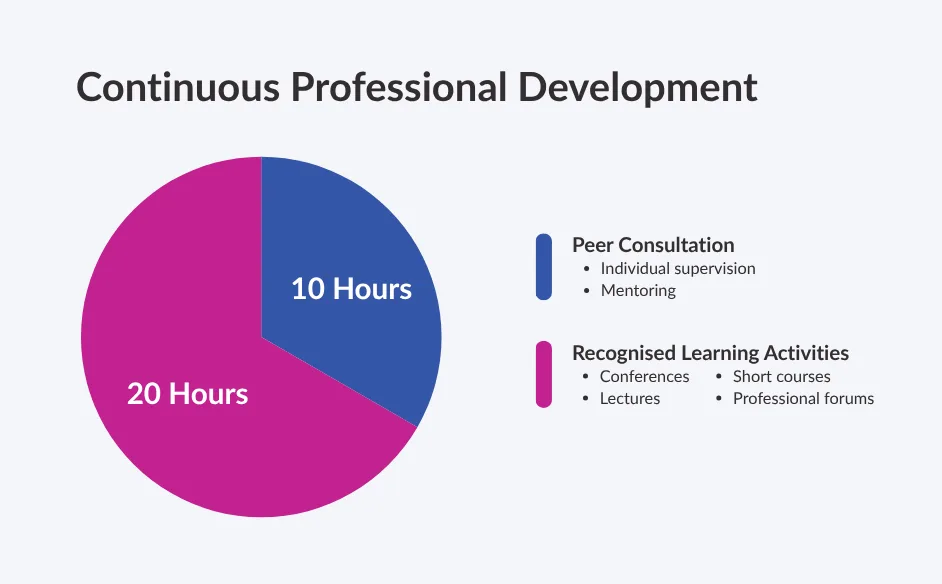
Many choose to undertake additional training to develop an area of practice endorsement, and it is compulsory for all registered psychologists to complete at least 30 hours of continuing professional development (CPD) each year to maintain their registration and keep their knowledge and skills up to date.
“Even when you come out of a masters, what you come out with is very basic,” Catherine says. “You have to expect to keep developing, because every client is different and there’s so much more to learn. You can’t just use one therapy and expect it to work for everyone.”
What does a psychologist not do?
Psychologists don’t prescribe medication – that’s the role of psychiatrists and GPs – and, Jacqui points out, they don’t have all the answers, tell people how to live their lives or make decisions for them.
“We’re not mind readers and we’re not the experts on life,” she says.
“The underpinning viewpoint among psychologists is that a person has the capacity to arrive at change themselves, but we walk alongside.”
Is a career as a psychologist right for you?
Psychology can be a rewarding career, but it also requires resilience, self-awareness and a commitment to ongoing learning. Before deciding if it’s the right path, Catherine encourages prospective students to look beyond the common perceptions of the profession.
“A lot of people think it's just about helping people, but there's a lot that goes into being able to do that, and it can be really draining,” she says.
You do need compassion, the ability to understand and really listen, but you also need to be able to compartmentalise so you don’t take your client’s issues home with you – because then you risk burnout.
For Jacqui, one of the strongest indicators that psychology is the right career is a genuine and enduring curiosity about people. If understanding why people think, feel and behave the way they do is something you naturally keep coming back to, she says, it's a good sign the profession could be a good fit.
“For me personally, I’m endlessly interested in what makes human beings tick."
Explore your study options through us
Ready to take the next step? Find out how to become a psychologist in Australia. Then browse the psychology courses you can study online through Open Universities Australia.
We help you find the right option and enrol; you become a student directly with your chosen university.
About the author

Claire Burke
Contributor
Claire Burke is a Melbourne-based writer with more than two decades of experience telling engaging stories around education, wellbeing, health and lifestyle. She considers it a privilege to share people's stories and enjoys creating thoughtful, human-centred content that resonates with readers. Away from the desk, she loves spending time with her family and getting outdoors with her dogs.
FAQs about psychologists
Can psychologists work remotely?
Yes. Telehealth has made remote work increasingly common, although it depends on a psychologist's area of practice and employer. Those working in research, organisational psychology, education or consulting may also have hybrid or fully remote work, while psychologists in hospitals, schools and many community settings typically spend more time on site.
Can psychologists run their own private practice?
Yes. Many psychologists eventually run their own private practice, giving them greater flexibility over their clients, hours and services. However, they also take responsibility for running a business, including administration, finances and compliance.
Do psychologists ever work outside healthcare settings?
Yes. Psychologists can work in schools, universities, businesses, government agencies, sporting organisations and research institutions, where they use their expertise to improve learning, workplace culture, organisational performance and public policy.
Can psychologists specialise in more than one area?
Yes. Many psychologists build expertise in more than one area over the course of their careers through additional training, varied experience and work with different client groups.
Can psychologists prescribe medication in Australia?
No. In Australia, psychologists use evidence-based therapies rather than prescribing medication. They may work alongside GPs or psychiatrists when medication is needed.
Are psychologists doctors?
No. Psychologists are trained health professionals, but they aren't medical doctors. While some hold a doctoral qualification (through completing a PhD) and use the title "Dr", unlike psychiatrists they don't attend medical school and generally can't prescribe medication.