What to expect from your work-life balance as a teacher
By Chloe CannPublished on
Alongside workload, many future teachers want to know how sustainable the career really is. Let’s explore how schools, systems and support services are helping teachers protect their wellbeing over time.
Teacher work-life balance: challenges and realities
Despite appearances, teaching isn’t a 9 to 3 job; prep, marking, admin, and meetings often spill beyond school hours.
The paperwork, in particular, can be a buzzkill at times for some teachers.
For others, it can be hard to ‘switch off’ in the evenings and weekends, especially during term time. Understanding how teachers manage this balance is an important part of stepping into the profession.
Finding balance in the early years
Tom Smithers, who has been a secondary school teacher at St Margaret's Anglican Girls School in Queensland for roughly nine years, says that making enough time for planning was his Achilles’ heel in the early days on the job.
“The biggest challenge I found was making sure that I had good lessons planned for the next day,” he explains. “Being really prepared was quite challenging because you're trying to plan these lessons, and then all of a sudden it’s end of term and you’ve got to mark six different classes worth of assignments; that really stresses you out.”
He says the more organised he was, the easier it became.
“My work-life balance was finding the best way to plan those lessons out where I wasn't spending too much time at home in my own free time putting work in towards school. As I became a more experienced teacher it got easier.”
Learn more: What a teacher's workload looks like
School culture makes a difference
According to Tom, a teacher’s experience of work-life balance can depend heavily on a school’s culture.

“I've been at schools where, at three o'clock, or whenever the school finishes, tumbleweeds are going through the staff room – people are out of there,” he says.
“I've also been at schools where most people don't leave until five. They'll hang around because they're having meetings with other staff members or they have to answer emails or make phone calls or whatever it is, but there's no expectation to be there.”
Managing the term’s ebbs and flows
Tom says workloads can fluctuate throughout the school term, which is why planning ahead helps.
“There are ebbs and flows. There'll be certain weeks throughout the term where the workload is manageable,” he explains. “It's quite easy. You're kind of chilling. And essentially, you're kind of preparing for the next sort of turbulent time where it's marking or reporting, or towards the end of term, when things get more hectic.
"So it's about understanding what the term is going to look like, what your own life is going to look like, preparing for that.”
Finding balance in going the extra mile
Part of the reason some teachers feel overworked is because they are such passionate educators who care deeply about what they do and want to invest their time to help make a difference, notes Tom.
Everything we do is for the kids, to make the next lesson better, or to make the next day more organised so that they have the best experience. And I think that as long as you have that as your mentality, you're okay.
"You can sacrifice that time, because you wouldn't be in this profession if you didn't care about the student outcome and how they're going to grow in maturity and in their own experience.
“That's why I got into it. That's why all my friends got into it. And as long as we have that at the forefront of our mind, it's worth it.”
The upside: flexibility and security
A lesser-known positive aspect of teaching is how adaptable the profession can be compared to many others. For those juggling young kids, health issues or caring roles, teaching roles offer genuine flexibility, from part-time options and casual and relief work to job security.
In many industries, employees can only request part-time work or extended unpaid leave after having children.
But in the education sector, state enterprise agreements and department policies go further. Schools are expected to accommodate part-time or job-share arrangements wherever possible, and teachers returning from parental leave retain their permanent status, salary progression, and right to resume full-time work later.
It’s one of the few careers where flexibility is formally built into the system, not left to employer discretion.
Learn more: Teacher salaries in Australia: A pay guide by state
The challenges early career teachers face
The struggle to achieve a good work-life balance is often most keenly felt by early career teachers, who are still learning the ropes and finding ways to streamline their workload.
According to the Australian Institute for Teaching and School Leadership (AITSL), which released early career teacher induction guidelines in 2023, new starters could richly benefit from:
- Structured mentoring
- A reduced teaching load
- Collaboration time
- Clear role expectations
- Ongoing support
While these recommendations haven’t been rolled out nationwide just yet, the tide is definitely beginning to turn: many states have now introduced dedicated support programs for early-career teachers that offer mentoring and structured PD.
And more positive changes are trickling through that protect work-life balance for all primary and secondary teachers too. For example, NSW has introduced a formal one-hour weekly cap on before- and after-school meetings in public schools.
“Starting out as a new teacher can definitely be a tricky part of teaching,” says Amy Renshaw, a Year 5 teacher at Riverbank Public School in Sydney, one of the largest public schools in the country.
“It can be quite daunting. But we're very well supported here. We've got something called ‘beginning teacher and early career’, and we provide a lot of support to our early career teachers to help with workload, managing classrooms, programming, and making sure they understand how things work."

Real stories: Teachers share their tips on managing your workload and wellbeing
Take a step back
According to Tom, the best advice he ever received from one of his mentors was to take a step back from everything and look at the bigger picture.
“When you're in that moment, you're so focused on what's in front of you that you really don't think about what's occurring in the long run. So I have to step back and look at myself from an external point of view, and go, ‘okay, I'm, I'm doing all of this, and I'm suffering because of it. So how am I going to fix this?’ All it was, was me starting to prioritise myself, and to prioritise what was efficient.”
Switch off outside of school
Through experience, Tom has learned that taking breaks is critical to his wellbeing. “When I go home, I stop and switch off,” he says. “Give yourself time to actually relax for a bit. And in the holidays, take that time to have a bit of a break, relax.”
Lean on colleagues
Breaks aside, Tom notes that leaning on your colleagues and accepting that there will be peaks and troughs, just like in any career, is key.
Reaching out to those around you and getting yourself involved in the community of a school makes a big difference. Get that help or advice from those that have done it beforehand. It's important to realise that every teacher is going to struggle at times, and every teacher is going to find it easy at times; and that’s the same for every single profession.
Set boundaries and small goals
Primary school teacher Amy says that boundaries and setting small, achievable goals can help you to manage workload and wellbeing.
“I think, especially in your early career, you should always have time limits, like, ‘I'm going to work on this until 3.30 or four o'clock’, and then go home and don't stay beyond that, if that’s what your work-life balance needs to be. I think setting yourself goals, even little goals of ‘today, I'm going to get this assessment marked’, that can be really helpful, because you're not procrastinating.”
An expert’s strategies for improving teacher work-life balance
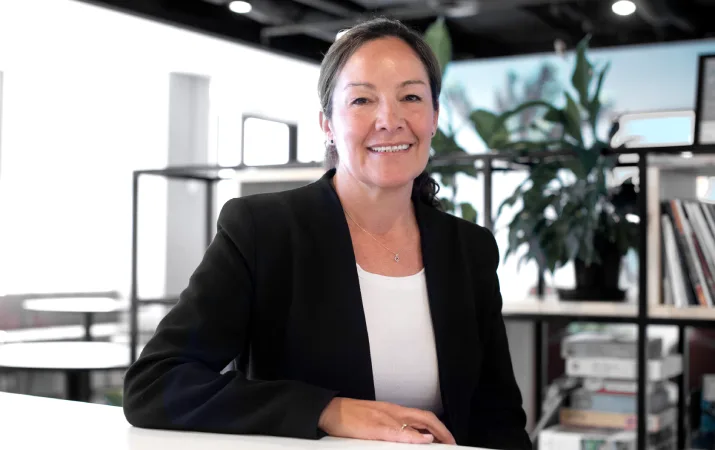
Supporting teacher wellbeing through Be You
Geri Sumpter, Head of Be You, says meaningful progress is being made to help teachers manage workload and mental health.
Launched in 2018, Be You is Australia’s national mental health and wellbeing in education initiative. It's delivered by Beyond Blue in collaboration with Early Childhood Australia and headspace.
It provides free, evidence-informed modules, toolkits and consultant support to help build resilient staff and mentally healthy schools. The program takes a whole-school approach, empowering teachers with practical wellbeing strategies while embedding supportive cultures, systems and practices across entire institutions.
What influences teacher wellbeing
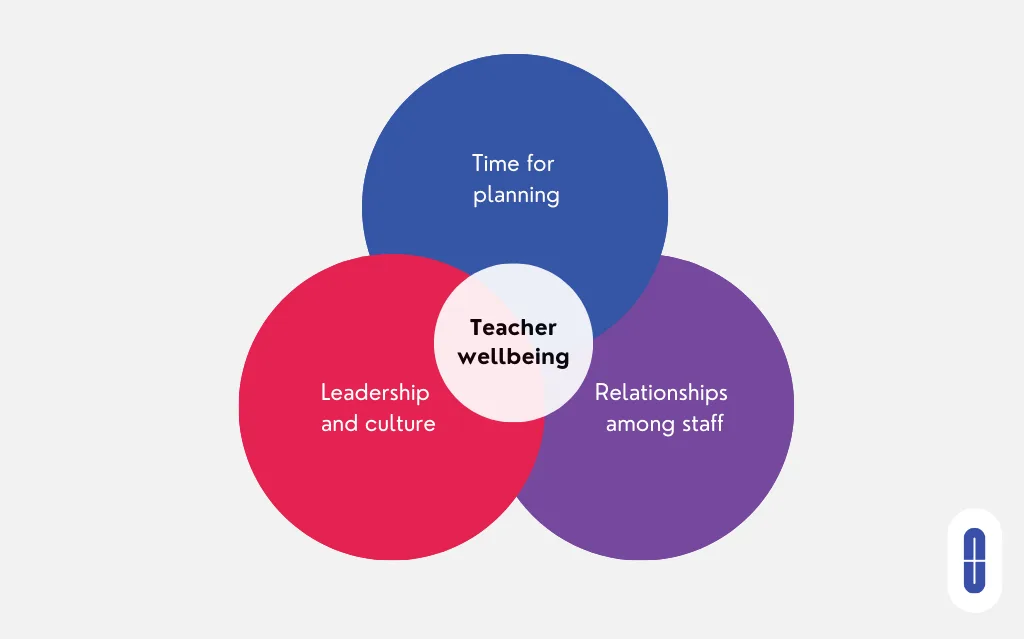
According to Geri, several factors can have a significant impact on teacher wellbeing:
- The importance of time made available to teachers for planning, marking and organising
- The importance of leadership in “establishing great cultures in which educators can thrive”
- The importance of strong relationships among staff
Early career teachers need extra support
Be You also recognises that early career teachers often need the most support.
“We know that historically there's been high stress and attrition within those early career teachers as they start to understand what it looks like to work in the education system,” she explains.
“And again, we've got initiatives that are Commonwealth-funded, such as Be You, that focus on the pre-service educator and those early career educators to help them to be classroom ready and to understand the importance of looking after their own mental health and well-being, as well as that of the children in their care.”
Everyday strategies that make a difference
When it comes to practical strategies that a primary or secondary teacher can use to improve their wellbeing, Geri offers some evidence-based suggestions that may seem small but can have a big impact.
Personal strategies like reframing mindset, gratitude, reflective practice,” she says. “It's doing that reflective practice, which is really common in schools anyway, for yourself, like ‘what’s happening for me, and how do I need to respond and cope with that?'
For some people, she says, it might be exercise or music, for others a digital detox on the weekend; the goal is to figure out what works for you and to use it proactively.
Building your own wellbeing plan
Aside from the power of mindset and self-reflection, Geri talks about the importance of zeroing in on coping strategies and self-care practices that work for you.
Through Be You’s wellbeing plan for educators, teachers are encouraged to take stock of their own stress triggers, personal supports and healthy lifestyle habits.
The process helps them reflect on what restores their balance, whether that means taking a short walk, reaching out for support, or recognising when a strong reaction comes from stress and can be managed.
These small but intentional resets, from breathing techniques in the classroom to brief moments of reflection, can help teachers regulate their own wellbeing and, in turn, support their students more effectively.
Support resources
- Employee Assistance Program (EAP)
- Australian Education Union (AEU)
- Independent Education Union (IEU)
- Be You
- Beyond Blue Support Service (24/7 free counselling via phone or webchat for anyone in Australia); 1300 22 4636
- Lifeline (24/7 crisis support and suicide prevention service); 13 11 14
- Self Care for Teachers (a podcast and digital resource for teachers that features a blog and webinars)
Ready to start your teaching career?
Build a rewarding future inspiring the next generation.
About the author

Chloe Cann
Contributor
Chloe Cann is a Melbourne-based journalist and editor with more than a decade of experience in the industry. She holds a masters degree in journalism from a London university and has contributed to magazines, newspapers, and websites across Australia, England, Cambodia and the US, including Lonely Planet, National Geographic Traveller and Condé Nast Traveller.
FAQs about your work-life balance as a teacher
What support is available for teachers facing burnout?
- Reach out for the support you’re entitled to: your school’s EAP, union wellbeing services, or national programs like Be You
- Use self-care tools: identify what helps you recover (exercise, downtime, digital detox etc), recognise your stress triggers, reflect regularly
- Talk to a senior staff member about your workload
- Join a peer support group at your school or online, or try to access a mentoring program
What are effective ways for teachers to improve their work-life balance?
- Set clear boundaries between work and home
- Prioritise and plan strategically
- Seek support from colleagues and senior staff whenever needed, and collaborate with others
- Use any available wellbeing resources
- Use the flexibility available to your advantage (for example shift to part-time hours if you have a young family or have care obligations)
- Prioritise your personal wellbeing by making use of school holidays